Remotely

Are you passionate about digital rights, privacy, and feminist futures? Do you possess the skills to delve into the complex world of spyware and digital surveillance? Women of Uganda Network (WOUGNET), with support from the Association for Progressive Communications (APC), is seeking a curious and committed consultant (or consultancy team) to lead groundbreaking research on the impact of surveillance technologies on women journalists, human rights defenders, and women leaders in Uganda.

Why this matters

From spyware creeping into private devices to biometric IDs and facial recognition tracking movements, surveillance is becoming a silent weapon against civic voices, especially women. These practices don’t just invade privacy; they silence advocacy, shrink civic space, and threaten democracy. Yet, too many stories remain untold, too many harms undocumented. This research seeks to bring them to light.

Scope of work

The consultant will:

  • Map the landscape of spyware and surveillance technologies used in Uganda, focusing on their gendered impact.
  • Document lived experiences of women journalists, human rights defenders, and leaders through testimonies, case studies, and narratives.
  • Analyse surveillance mechanisms (state and private actors), identifying patterns, risks, and emerging trends.
  • Uncover knowledge gaps and propose areas for future advocacy and research.
  • Produce a comprehensive report with evidence-based recommendations to inform policy, advocacy, and capacity building.

Deliverables

A polished research report that is rigorous, gender-sensitive, accessible to both policymakers and activists, and ready for public dissemination by 20th December 2025.

Who we are looking for

  • Solid research experience in digital rights, surveillance, or related fields (bonus if with a gender/feminist lens).
  • Strong qualitative and/or mixed-methods research skills, including interviewing vulnerable groups with sensitivity and ethics.
  • Demonstrated ability to translate complex technical issues into clear, compelling narratives.
  • Familiarity with Uganda’s digital and political landscape (East African/regional expertise desirable).
  • A flair for connecting data, people, and policy because this is not just research but a storytelling for justice.

Timeline

  • Submission of draft report by 30th November, 2025.
  • Submission of final report by 20th December, 2025.

How to apply

Send us by 22nd October, 2025:

  • A short proposal (max. 5 pages) outlining your approach, methodology, and work plan.
  • A financial proposal (in USD, inclusive of taxes).
  • Your CV (and that of any team member/s).
  • Two samples of similar work (reports, articles, briefs).
  • Applications should be sent to: info@wougnet.org while copying in  “mgt@wougnet.org” with the subject line:Consultancy Application: Spyware & Surveillance Research.”

Please note that Women and Persons With Disabilities (PWDs) are strongly encouraged to apply.

This is not just a consultancy, it’s a chance to help women reclaim the net, push back against digital repression, and spark feminist digital futures.

Background 

Women Human Rights Defenders (WHRDs) in Uganda and across the region continue to face growing threats to their digital, physical, and psychosocial security. These challenges undermine their activism, resilience, and wellbeing. To respond, WOUGNET is implementing Reclaiming Our Spaces: Holistic Security and Strategies for WHRDs in Uganda, an initiative aimed at strengthening the security of WHRDs through collective strategies, training, and knowledge resources. 

Assignment 

WOUGNET seeks to engage a qualified consultant (or team of consultants) to develop a Holistic Security Toolkit. This toolkit will be: 

  • Comprehensive and user-friendly addressing digital, physical, and psychosocial security. 
  • Co-created with WHRDs ensuring it reflects lived realities and feminist approaches. 
  • Practical and adaptable offering actionable tools for WHRDs in diverse contexts. 

The consultant will work closely with WOUGNET to design and facilitate consultative virtual engagements with WHRDs across regions to inform the toolkit content. 

Key Deliverables 

  1. Inception report and workplan. 
  2. Consultative virtual engagements with WHRDs across regions. 
  3. Draft holistic security toolkit. 
  4. Brief presentation of the toolkit to WOUGNET and partners. 

Required Qualifications 

  • Proven expertise in digital, physical, and psychosocial security for HRDs/WHRDs. 
  • Experience in participatory/feminist methodologies and co-creation processes. 
  • Strong facilitation skills, especially in virtual/online consultations. 
  • Excellent writing and communication skills in English (knowledge of local languages is an asset). 
  • Familiarity with the Ugandan/East African WHRDs context preferred. 

Application Process 

Interested and qualified consultants should submit: 

A technical and financial proposal (combined in one PDF document not exceeding 3 pages), highlighting approach, methodology, experience, and total cost. 

NB: Financial proposals will be evaluated based on the total funds available for the assignment and WOUGNET will enter negotiations with the best-evaluated consultant. 

A detailed Curriculum Vitae (max 2 pages) highlighting similar assignments. 

Submission of the technical, financial proposal, and Curriculum Vitae should be e-mailed to info@wougnet.org and cc: mgt@wougnet.org, Subject: Reclaiming Our Spaces: Holistic Security and Strategies for WHRDS in Uganda  

Deadline for submission is on or before 5:00 PM EAT on 1st October 2025

In case of any queries please contact:mgt@wougnet.org. 

Note: Any data collected during this consultancy will be used solely for WOUGNET’s project purposes and will not be shared with third parties without permission. 

1. Introduction

The Civil Society in Uganda Participation Program (CUSP) is a multi-stakeholder initiative aimed at  creating a vibrant and resilient civil society and fostering an enabling environment for women-led Civil Society Organizations in Uganda, particularly among marginalised and underrepresented groups.

Implemented in partnership with national and grassroots organisations, CUSP has engaged in various activities including advocacy campaigns, legal and policy dialogue, and awareness-raising on digital and offline rights.

As the project nears its conclusion, an end-of-project evaluation is needed to assess the relevance, effectiveness, efficiency impact, and sustainability of interventions related to women’s freedom of expression and access to information.  

  1. Background

Uganda has made significant strides in recognizing and protecting women’s rights, both domestically and through international commitments. The 1995 Constitution of the Republic of Uganda guarantees equality and non-discrimination based on gender under Article 21. Additionally, Uganda is a signatory to various international treaties and conventions such as the Convention on the Elimination of All Forms of Discrimination Against Women  (CEDAW).

Despite the existence of  such legal frameworks, there remains a need to address gender disparities and ensure that women are considered in policy formulation processes. Women in  Uganda still face numerous challenges for example Technology facilitated Gender-Based Violence. The right to freedom of expression is provided for in Uganda’s Constitution, recognizing the importance of a free press and open public discourse. However, in practice, this right is sometimes restricted, especially concerning dissenting voices and criticism of the government.

Despite the implementation of laws such as the Computer Misuse Act, the rise of online spaces has provided new avenues for expression and access to information. However, it has also brought about new challenges, including online gender-based violence and the spread of gendered misinformation. Challenges and misuse of these laws still persist in the implementation. Many citizens, especially those in rural areas, still struggle to access essential information due to factors such as limited infrastructure, low levels of literacy, and language barriers. Marginalised groups, including women, persons with disabilities, and rural communities, often face additional hurdles in accessing information that directly impacts their lives.

3 . Purpose of the Consultancy

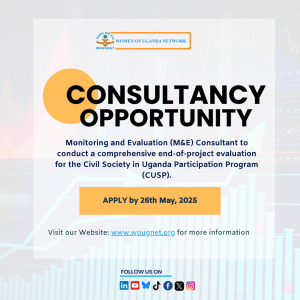
WOUGNET seeks to engage an experienced Monitoring and Evaluation (M&E) Consultant to conduct a comprehensive end-of-project evaluation. The consultant will assess project outcomes, identify lessons learned, and provide actionable recommendations to inform future programming and policy engagement.

4. Scope of Work

The consultant will be expected to:

  • To assess the extent to which the project achieved its intended objectives, particularly in relation to enhancing women’s freedom of expression and access to information.
  • To evaluate the effectiveness and efficiency of project implementation strategies and partnerships.
  • To determine the impact and sustainability of the project on target beneficiaries, especially structurally silenced women.

5. Duration and Timeline

The assignment is expected to take 20 working days, from the contract signing date. Key dates will be agreed upon at the inception meeting. The assignment is expected to run between June to july 2025.

7. Deliverables

  • Prepare an Inception report including  methodology,  data collection tools and proposed work plan.
  • Prepare a field  report ncluding  raw data set,photos, transcripts nd vidoes where need be.
  • Prepare a draft assessement report,  and present preliminary findings to WOUGNET and partners.
  • Prepare a final evaluation report (max 25 pages excluding annexes) including feedback generated from the presentations of preliminary findings, final tools used, informed consent forms, references.

Annexes: Tools used, stakeholder list, photos (where relevant), references.

8. Required Qualifications and Experience

WOUGNET is looking for a competent consultant/ resource person with proven experience in undertaking similar assignments including but not limited to   

  • Minimum of a Bachelor’s degree in Statistics, Quantitative Economics, Development Studies, Gender Studies, Public Policy, or related fields. A postgraduate diploma  or Master’s in Monitoring and Evaluation is an added advantage.
  • At least 4  years of experience in participatory evaluation methods and tools to conduct project evaluations, preferably in gender, governance, human rights, or women’s empowerment programs.
  • Demonstrated knowledge of gender equality, civic space, freedom of expression, and access to information in Uganda.
  • Strong analytical, writing, and presentation skills and Ability to deliver high-quality outputs within agreed deadlines.

9. Application Process

Interested and qualified consultants should submit: 

  • A technical and financial proposal (combined in one PDF document not exceeding 5 pages), highlighting approach, methodology, experience, and total cost. 
  • NB: Financial proposals will be evaluated based on the total funds available for the assignment and WOUGNET will enter negotiations with the best-evaluated consultant. 
  • A detailed Curriculum Vitae (max 2 pages) highlighting similar assignments.
  • Two samples of previous evaluation reports or similar work.

Submission of the technical, financial proposal, and Curriculum Vitae should be e-mailed to info@wougnet.org and cc: mgt@wougnet.org, Subject: CUSP M&E Consultant 2025.

Deadline for submission is on or before 5:00 PM EAT on Monday 26th  May, 2025.

Introduction 

Women of Uganda Network (WOUGNET) is a non-governmental organisation initiated in May 2000 by several women’s organisations in Uganda to develop and promote the use of information and communication technologies (ICTs) among women as tools to share information and address issues collectively. WOUGNET envisions an inclusive and just society where women and girls are enabled to use ICTs for sustainable development. 

In partnership with the Association for Progressive Communications (APC), WOUGNET is implementing the Our Voices, Our Futures (OVOF) project. This project seeks to transform the status of women, especially those who have historically been silenced. OVOF collaborates with women’s rights organisations, feminist movements, structurally silenced communities, and various actors including artists, cultural leaders, the media, and policymakers to create enabling environments for women’s agency and voice. 

Background 

Structurally silenced women in Uganda including; women human rights defenders (WHRDs), women with disabilities, sex workers, and women from rural and indigenous communities face mounting challenges due to increasing State surveillance, invasive data collection practices, unjust privacy violations, and deliberate internet/network disruptions. These systemic challenges are compounded by a legal and policy framework that lacks robust safeguards for the digital rights of women, especially those most marginalised. 

Although Uganda’s legal landscape includes instruments such as the 1995 Constitution (Articles 21 and 33), the Data Protection and Privacy Act of 2019, and the Computer Misuse Act of 2011, these laws have often been applied selectively or failed to adequately consider the gendered impact of digital rights violations. Recognising the urgent need for reform and informed advocacy, WOUGNET seeks to develop a comprehensive policy brief to analyse existing laws and policies related to surveillance, privacy, data protection, and network disruptions, with a feminist and intersectional lens. 

Main Objective 

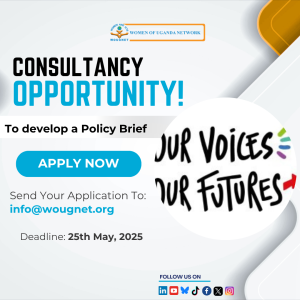
To develop a comprehensive, evidence-based policy brief that analyses surveillance, data protection and privacy, and network disruption laws and practices in Uganda and their impact on structurally silenced women, with practical and inclusive recommendations for advocacy and reform. 

Specific Objectives 

  • To identify and analyse the gendered impact of surveillance, privacy violations, data misuse, and network disruptions on structurally silenced women in Uganda. 
  • To consult with 15 structurally silenced women and activists to gather lived experiences, issues, and recommendations. 
  • To develop a policy brief with clear, actionable recommendations targeting state and non-state actors. 
  • To disseminate and validate the policy brief in a follow-up workshop facilitated by WOUGNET, incorporating feedback from a diverse group of stakeholders. 

Scope of the Assignment 

Submit an inception report with a detailed work plan and methodology. 

Facilitate one virtual workshop with 15 structurally silenced women and activists to collect evidence, views, and recommendations from participants. This will be organised by WOUGNET with your support. 

Draft a policy brief analysing the relevant legal and policy frameworks with a gender and human rights lens. 

Attend and present findings at a second physical workshop organised by WOUGNET for validation and feedback from stakeholders, including policymakers and WHRDs. 

Finalise the policy brief incorporating stakeholder inputs. 

Duration of the Assignment 

The consultant shall complete this assignment within 20 working days, inclusive of both workshops and submission of the final policy brief. No extensions will be granted. 

Deliverables 

Inception report with detailed methodology and schedule. 

Virtual workshop facilitated with 15 structurally silenced women and activists. 

Draft policy brief submitted for review. 

Participation and presentation at the validation workshop convened by WOUGNET. 

Qualifications and Required Competencies for the Consultant 

WOUGNET is looking for a competent consultant/ resource person with the requisite training, knowledge, skills, and proven experience in undertaking similar assignments.   

  • A minimum of a bachelor’s degree in Gender Studies, Law, ICT Policy, Human Rights, Social Sciences, or related field. A master’s degree is an added advantage. 
  • At least 5 years of experience in policy analysis, gender and digital rights, feminist research, or human rights advocacy. 
  • Demonstrated experience facilitating participatory consultations with marginalised groups. 
  • Proven record of developing impactful policy briefs or research reports on gender and digital rights. 
  • Strong understanding of Uganda’s legal and policy framework on ICT, privacy, surveillance, and digital freedoms. 
  • Excellent written and verbal communication skills in English.  
  • Ability to work efficiently and deliver outputs under the assignment within agreed timelines and deadlines 

Application Process 

Interested and qualified consultants should submit: 

A technical and financial proposal (combined in one PDF document not exceeding 5 pages), highlighting approach, methodology, experience, and total cost. 

NB: Financial proposals will be evaluated based on the total funds available for the assignment and WOUGNET will enter negotiations with the best-evaluated consultant. 

A detailed Curriculum Vitae (max 2 pages) highlighting similar assignments. 

Submission of the technical, financial proposal, and Curriculum Vitae should be e-mailed to info@wougnet.org and cc: mgt@wougnet.org, Subject: Our Voices, Our Futures Policy Brief 2025
Deadline for submission is on or before 5:00 PM EAT on 25th May 2025

Note: Feminists and Women Human Rights Defenders are strongly encouraged to apply. 

In case of any queries please contact:mgt@wougnet.org.  

Uganda has made significant strides in recognizing and protecting women’s rights, both domestically and through international commitments. Despite the existing legal frameworks, women-led civil society organizations (CSOs) in Uganda still face numerous barriers to their existence and operations, including new laws and policies that restrict rights and freedoms, particularly freedom of expression. The 1995 Constitution of Uganda guarantees equality and non-discrimination based on gender. Furthermore, Uganda is a signatory to various international treaties and conventions, including the Convention on the Elimination of All Forms of Discrimination Against Women.

With support from the Commonwealth Foundation, WOUGNET is currently implementing the Civil Society in Uganda Participation Program, aimed at fostering vibrant and resilient women-led civil society organizations (CSOs).
WOUGNET is working with civil society and Government to contribute to a more open and secure environment for women-led civil society organisations in Uganda by increasing knowledge of policies governing freedom of expression and access to information to improve legal compliance and to address gaps that contribute to misinterpretation and misapplication of policies. 

The WOUGNET National Civic Tech Innovation Hackathon on Freedom of Expression  aims to unite innovators and stakeholders nationwide to develop civic technology solutions that address barriers to women’s digital freedom of expression, civic participation and access to information. We invite innovators and stakeholders, whether individuals, groups, or organizations to participate in this exciting event and submit their concept notes by Friday 25th April, 2025. Successful applicants will be contacted to pitch and present their ideas and innovations. Only successful applicants will be contacted.

What are we looking for? 

The hackathon seeks tech-driven solutions that: 

  • Safeguard women’s freedom of expression in online and offline spaces
  • Improve women’s access to information, especially in marginalized communities
  • Strengthen digital resilience for women-led CSOs against restrictive policies
  • Promote digital security and online safety for Women Human Rights Defenders
  • Leverage AI and open data source to enhance civic participation

Prizes  AND Opportunities

  • A cash prize of  One Million Five Hundred Thousand Uganda Shillings (1,500,000 UGX)  will be awarded to each of the top three innovations.
  • Mentorship, networking and potential further funding opportunities for outstanding solutions

Theme: Civic Tech Innovation on Freedom Of Expression

Objective: Develop innovative solutions that enhance and protect women’s Freedom of Expression, Access to Information and resilience of women-led civil society organizations.

Eligibility: Open to all Ugandans. Participation can be individual or in teams not exceeding three members. A member can only belong to one team. 

Duration: Interested applicants should submit their concept notes by Friday 25th April, 2025. Successful applicants will be invited to present their prototypes, innovations, and ideas to a panel of judges who will evaluate them based on a predefined criteria to select the top three innovations.

Interested applicants should submit their concepts Here

Evaluation criteria

Applications will be evaluated basing on the following criteria:

  • Innovation: Originality and creativity of the solution.
  • Impact: Potential of the solution to enhance FoE and resilience of CSOs.
  • Feasibility: Practicality, scalability and inclusivity of the solution.
  • Technical Achievement: Quality of the technical implementation.
  • Presentation: Clarity and effectiveness of the presentation/demo.
  • Gender-responsiveness: Gender responsive design and potential to prevent gender backlash.

GOOD LUCK!!!

Background: 

The  Civil Society in Uganda Participation Program (CUSP) project, supported  by the Commonwealth Foundation , aims to raise awareness about discriminatory laws and policies that impede women from exercising their freedom of expression and accessing information. Additionally, it advocates for the meaningful participation of marginalized women in policy-making processes. 

As part of ongoing advocacy to create inclusive and safe digital environments, WOUGNET has been actively engaging with government regulators, representatives and women-led organisations to understand the governance frameworks around online spaces in Uganda.

To support this work, WOUGNET is seeking a qualified consultant to develop a Policy Brief that highlights the key challenges faced by women or other marginalised groups in terms of A2I and FoE and gaps in legal framework that need to be addressed by the policy makers. This brief will inform national-level advocacy efforts for improving the inclusion of women in policy making processes and ensuring a gender-inclusive digital environment.

The objective of the Consultancy: 

The main objective of this consultancy is to produce a comprehensive gender inclusive Policy Brief that outlines the  key challenges faced by women or other marginalised groups in terms of A2I and FoE and gaps in legal framework that need to be addressed by the policy makers, with a special focus on gender inclusion and safety for women in digital spaces.

Key Concerns:

  • Freedom of expression (Gendered disinformation, media freedoms, online gender-based violence etc.) and the absence of robust protection mechanisms.
  • Access to the internet and the digital divide, especially for women and underserved communities.
  • Access to information in terms of the existence of laws and accessibility.

The consultant while analysing the key concerns governing the online space, the policy brief must prioritize the following:  

  • Gaps and challenges in the current regulations governing online spaces, particularly for women and marginalized groups in regards to Freedom of Expression and Access to Information
  • Findings from recent consultations with government representatives, regulatory bodies and women-led organisations on the state of digital governance in Uganda.
  • Recommendations for policy changes, collaboration, and stakeholder engagement to ensure inclusive policy making processes.

Scope of Work: 

The consultant will:

  1. Review documentation and findings from consultations held between WOUGNET and government representatives/regulators involved in the governing of online spaces in Uganda.
  2. Analyze Uganda’s current legal and policy frameworks governing online spaces, especially in relation to freedom of expression and access to information.
  3. Identify key challenges, opportunities, and gaps in these regulations and provide solutions to bridge these gaps.
  4. Develop practical, evidence-based recommendations for improving the governance of online spaces, policy making processes and  ensuring they are safe and inclusive.
  5. Facilitate stakeholder input into the development of the policy brief, including discussions with civil society organizations, digital rights advocates, and government bodies.
  6. Draft and finalize a gender inclusive Policy Brief for dissemination to stakeholders and policy influencers.

Expected Deliverables:

  • A detailed Policy Brief (10-15 pages) summarizing findings and recommendations from engagements with government regulators, focusing on governance frameworks of online spaces and gender inclusion.
  • A presentation or summary document to facilitate dissemination to key stakeholders, including government officials, civil society organizations, and international partners.

Duration: 

The consultancy is expected to last four (4) weeks from the signing of the contract.

Eligibility Criteria: 

Applicants should meet the following criteria:

  • Proven expertise in digital rights, gender, and policy advocacy.
  • Experience in drafting policy briefs, position papers, or research reports.
  • Familiarity with Uganda’s regulatory and digital landscape.
  • Strong analytical and communication skills.
  • Experience working with civil society organizations, government institutions, or advocacy groups in Uganda or similar contexts.

Submission Guidelines:

 Interested applicants should submit the following:

  1. A technical proposal outlining the approach to developing the policy brief. (max 3 pages)
  2. A financial proposal detailing the total cost of the consultancy, including daily rates and other expenses.(max 1 pages)
  3. CVs of the consultant or team members, highlighting relevant experience.
  4. Samples of previous work, especially policy briefs or similar advocacy documents.

Submission Deadline: 

All applications must be submitted by 17th March 2025  to info@wougnet.org with the subject line: “Consultancy Proposal: “CUSP Policy Brief Addressing Barriers to Women’s Rights Online” 

Evaluation Criteria: 

Proposals will be evaluated based on:

  • Relevance and clarity of the methodology
  • Consultant’s experience and qualifications
  • Cost-effectiveness of the proposal

We look forward to receiving your applications and working together to advance gender-inclusive internet governance in Uganda!

-End-

Background: 

The Our Voices, Our Futures (OVOF) project, supported by the Women of Uganda Network (WOUGNET), aims to enhance women’s voices, rights, and leadership in both offline and online spaces, particularly focusing on marginalized and structurally silenced women. As part of ongoing advocacy to create inclusive and safe digital environments, WOUGNET has been actively engaging with government regulators and representatives to understand the governance frameworks around online spaces in Uganda.

To support this work, WOUGNET is seeking a qualified consultant to develop a Policy Brief that highlights the key issues and recommendations identified during these engagements with government bodies. This brief will inform national-level advocacy efforts for improving the governance of online spaces in Uganda and ensuring a gender-inclusive digital environment.

The objective of the Consultancy: 

The main objective of this consultancy is to produce a comprehensive gender inclusive Policy Brief that outlines the regulatory challenges, governance frameworks, and potential solutions related to online spaces in Uganda, with a special focus on gender inclusion and safety for structurally silenced women.

Key Concerns:

  • Freedom of expression (Gendered disinformation, media freedoms, online gender-based violence etc.) and the absence of robust protection mechanisms.
  • Access to the internet and the digital divide, especially for women and underserved communities.
  • Data Protection and Privacy (Cybercrimes, Data protection and governance, surveillance, smart city developments linked to privacy etc.)
  • Access to information in terms of the existence of laws and accessibility.
  • Digital Inclusion; looking at the Inclusive Digital ID systems and Universal Service Fund

The consultant while analysing the key concerns governing the online space, the policy brief must prioritize the following:  

  • Gaps and challenges in the current regulations governing online spaces, particularly for women and marginalized groups.
  • Findings from recent consultations with government representatives and regulatory bodies on the state of digital governance in Uganda.
  • Recommendations for policy changes, collaboration, and stakeholder engagement to ensure inclusive digital spaces.

Scope of Work: 

The consultant will:

  1. Review documentation and findings from consultations held between WOUGNET and government representatives/regulators involved in the governing of online spaces in Uganda.
  2. Analyze Uganda’s current legal and policy frameworks governing online spaces, especially in relation to gender.
  3. Identify key challenges, opportunities, and gaps in these regulations and provide solutions to bridge these gaps.
  4. Develop practical, evidence-based recommendations for improving the governance of online spaces, ensuring they are safe and inclusive.
  5. Facilitate stakeholder input into the development of the policy brief, including discussions with civil society organizations, digital rights advocates, and government bodies.
  6. Draft and finalize a gender inclusive Policy Brief for dissemination to stakeholders and policy influencers.

Expected Deliverables:

  • A detailed Policy Brief (10-15 pages) summarizing findings and recommendations from engagements with government regulators, focusing on governance frameworks of online spaces and gender inclusion.
  • A presentation or summary document to facilitate dissemination to key stakeholders, including government officials, civil society organizations, and international partners.

Duration: 

The consultancy is expected to last four (4) weeks from the signing of the contract.

Eligibility Criteria: 

Applicants should meet the following criteria:

  • Proven expertise in digital rights, gender, and policy advocacy.
  • Experience in drafting policy briefs, position papers, or research reports.
  • Familiarity with Uganda’s regulatory and digital landscape.
  • Strong analytical and communication skills.
  • Experience working with civil society organizations, government institutions, or advocacy groups in Uganda or similar contexts.

Submission Guidelines:

 Interested applicants should submit the following:

  1. A technical proposal outlining the approach to developing the policy brief. (max 3 pages)
  2. A financial proposal detailing the total cost of the consultancy, including daily rates and other expenses.(max 1 pages)
  3. CVs of the consultant or team members, highlighting relevant experience.
  4. Samples of previous work, especially policy briefs or similar advocacy documents.

Submission Deadline: 

All applications must be submitted by 10th November 2024 to info@wougnet.org with the subject line: “Consultancy Proposal: OVOF Policy Brief on Governing Online Spaces.”

Evaluation Criteria: 

Proposals will be evaluated based on:

  • Relevance and clarity of the methodology.
  • Consultant’s experience and qualifications.
  • Cost-effectiveness of the proposal.

We look forward to receiving your applications and working together to advance gender-inclusive internet governance in Uganda!