Reflections from WOUGNET’s Holistic Security Training under the “Reclaiming Our Spaces” Project
By Caroline Cherop, Executive Director, Young Wombs Trauma Centre
Why holistic security matters
The work of women human rights defenders is often described in the language of courage. Too rarely is it described in the language of survival, yet for many women defenders, safety is never only about physical protection; it is also about navigating online harassment, responding to surveillance risks, protecting loved ones, managing fear and exhaustion, and finding the strength to continue speaking out in hostile environments. International Human Rights bodies have documented that women human rights defenders face gender-specific threats, violence, defamation, hostility from authorities and communities, attacks in digital spaces, and even targeting of family members. In Uganda, those realities unfold within a broader context of shrinking civic space, pressure on dissent, and documented fears of surveillance that chill freedom of expression and association. Recent UN-backed findings make the urgency even clearer: 70 percent of surveyed women human rights defenders, activists, and journalists reported online violence or technology facilitated gender based violence, 41 percent linked it to offline harm, and nearly one in four reported AI-assisted abuse such as deepfakes or manipulated content.
Across several African contexts, the same pattern is visible. Research on human rights defenders in countries including the Democratic Republic of the Congo, Kenya, Senegal, and Zimbabwe found that many defenders believe they are under surveillance, that hostile political environments directly undermine their work, and that women defenders face additional gendered forms of digital abuse, such as doxing, sexual harassment, and the non-consensual sharing of intimate images and/or videos. The study also found major gaps in advanced digital security skills, pointing to the need for practical, context-specific, ongoing capacity building rather than one-off awareness sessions.
A training grounded in lived realities
It was in this context that Young Wombs Trauma Centre had the privilege of participating in a transformative, holistic security training organised by the Women of Uganda Network (WOUGNET) in December 2025, under the Safety for Voices project. For us, this was not just another workshop. It was a timely and deeply relevant intervention that spoke directly to the realities faced by women human rights defenders, grassroots advocates, survivors of gender-based violence, teenage mothers, and girls whose lives are shaped by both structural inequality and personal risk.
WOUGNET, a Ugandan organisation founded in 2000 to advance the use of information and communication technologies by women and girls for gender equality and sustainable development, implemented the “Reclaiming Our Spaces” project with support from the Association for Progressive Communications. The project was designed around the lived experiences of women human rights defenders and aimed to strengthen safety through an intersectional and feminist approach that combined practical skills, training workshops, peer learning, and context-specific strategies across Central, Eastern, Northern, and Western Uganda.
At the centre of this effort was WOUGNET’s Holistic Security Toolkit for Women Human Rights Defenders. The toolkit is a practical, user-friendly resource meant to help defenders, case handlers, and protection actors understand, prevent, and respond to physical, digital, and psychological security threats. That framing mattered to us because it reflected something many grassroots organisations already know from experience: insecurity does not arrive in separate boxes. Physical risk, digital harm, and emotional strain are deeply connected, and our responses must be equally connected if they are to be sustainable.
Learning in a space of solidarity
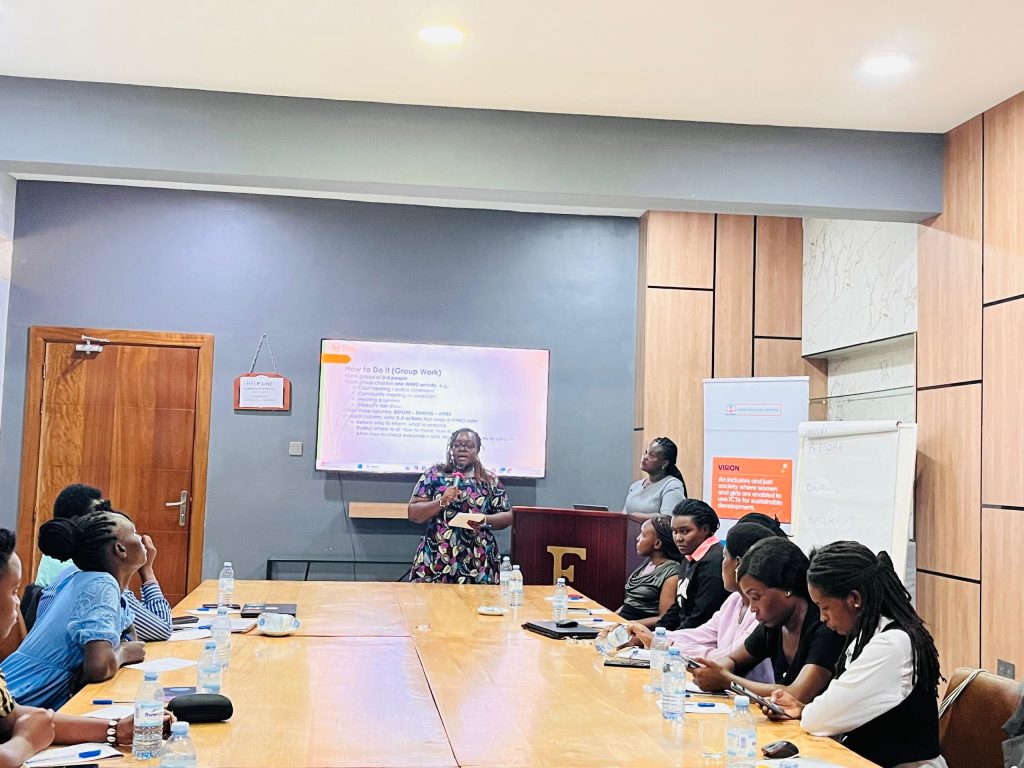
The two-day Training of Trainers (ToT) workshop introduced participants from Young Wombs Trauma Centre and partner organisations to the three core pillars of the toolkit: digital security, physical protection, and psychosocial wellbeing. This was a powerful atmosphere of honesty, trust, and solidarity that shaped how that content was shared. Participants were able to speak openly about the threats they encounter in their work, from online harassment and intimidation to emotional stress, burnout, surveillance, and the anxiety that comes with defending women and vulnerable communities in difficult environments.
That spirit of peer exchange is exactly what makes holistic security such a powerful framework. Front Line Defenders defines holistic security as an approach that integrates self-care, well-being, digital security, and information security into traditional security management. Protection International makes a similar point from a psychosocial perspective, arguing that care and protection are indivisible because fear, stress, and trauma affect both individuals and groups, and therefore shape how safely defenders can act. In other words, emotional well-being is not a soft extra. It is part of real protection.
Through role-plays, practical exercises, reflection, and group discussions, the training reinforced the importance of collective care. It reminded us that women defenders do not become safer simply by learning to react to danger; we become safer when we can recognise risks early, build habits of preparedness, support one another emotionally, and create organisational cultures where safety is discussed openly rather than only after harm has already occurred.
Taking the toolkit back to the community
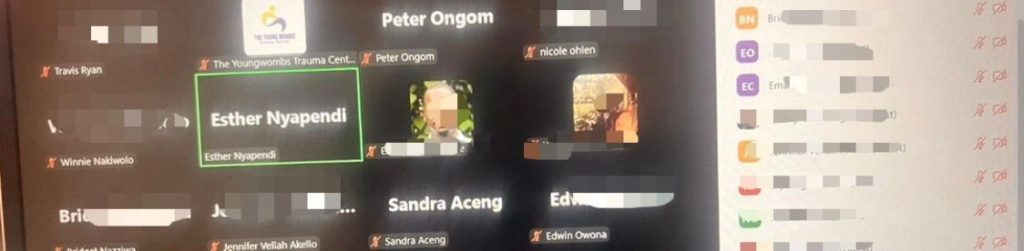
One of the most important outcomes of the training was that it did not end in the training room. By the end of the workshop, we had gained not only knowledge but also the confidence to use the toolkit in our own spaces. We learned how to facilitate security conversations, guide practical exercises, adapt materials to local realities, and create safer learning environments for women defenders and community advocates. That confidence translated into immediate action, and on 19 December 2025, Young Wombs Trauma Centre organised a holistic security webinar with technical support from WOUGNET and coordination in Wakiso District. The session brought together 15 women defenders and community advocates from different regions, including grassroots organisers, women human rights defenders, and community-based advocates. It became a rich space for shared learning, reflection, and practical planning.
During the webinar, we used the slides, checklists, and facilitation tools from the WOUGNET toolkit to guide discussions on digital safety, physical security, stress management, and community protection. Participants were able to identify risks in their own environments and develop practical steps for staying safer while continuing their advocacy work. What stood out most was the shift in mindset: participants did not leave with fear; they left with language, structure, and concrete actions.
What changed for Young Wombs Trauma Centre
For Young Wombs Trauma Centre, the impact of the Training of Trainers has been significant. As an organisation working with teenage mothers, survivors of gender-based violence, girls, and grassroots women advocates both in Uganda and Kenya, we now see holistic security not as an added activity, but as a core part of protection and empowerment for our communities. The training strengthened our ability to integrate tailored digital literacy skills, emotional well-being, trauma-informed support practices, and safety planning into our programs in practical, accessible ways.
It has also changed how we facilitate. We are now more intentional about using interactive and empathetic methods, including storytelling, reflection, small-group discussion, practical exercises, and emotional well-being check-ins. These approaches do more than transfer knowledge. They create space for people to feel seen, heard, and supported as they process difficult realities. That matters deeply when working with women and girls whose advocacy lives are often shaped by trauma, stigma, poverty, and isolation.
Importantly, the training helped us understand that security planning must always be local. It must speak the language of the community, fit the resources people actually have, and respond to lived realities rather than ideal models. That is why the toolkit felt so useful. It was practical enough to apply, but flexible enough to adapt.
Building safer movements through collective care
The deeper lesson from this experience is that protection becomes more powerful when it is shared. WOUGNET’s “Reclaiming Our Spaces” project was designed to build a cross-regional network of defenders equipped with skills, tools, and strategies grounded in their own realities. From our perspective at Young Wombs Trauma Centre, that model is working. By investing in trainers and community-based organisations, the project has enabled knowledge to move beyond a single workshop and into communities, organisations, and local support systems, where it can continue to grow. What this partnership has reinforced for us is that protection is not only about responding to threats but also about prevention, preparedness, healing, confidence, and solidarity. International human rights experts have repeatedly noted that women human rights defenders are often left without effective, inclusive, and gender-responsive protection, even though the risks they face are specific and well known. That is why initiatives grounded in feminist care, practical tools, and local leadership matter so much. They do not just reduce vulnerability. They strengthen resilience.
As Young Wombs Trauma Centre, we remain deeply grateful to WOUGNET for the technical support, mentorship, and trust extended to us through this process. We are proud to be part of the “Reclaiming Our Spaces” network and to contribute to advancing holistic safety practices for women human rights defenders, teenage mothers, girls, and grassroots advocates across Uganda. When women are equipped with the right knowledge, tools, and support systems, they do more than survive in hostile environments. They continue their work with greater courage, dignity, and resilience. And that, ultimately, is what reclaiming our spaces is about.